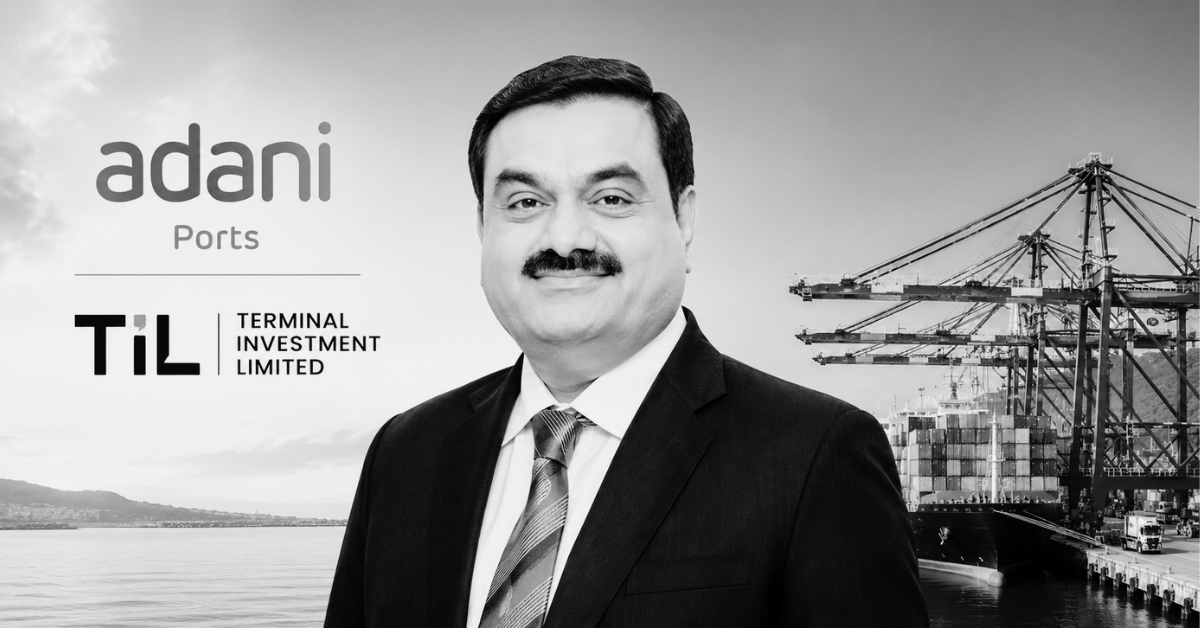
MSC’s Terminal Investment Limited Makes Landmark Investment in India’s Largest Deep-Draft Transshipment Port
Adani Ports and Special Economic Zone (APSEZ) has announced a landmark strategic partnership with Terminal Investment Limited (TiL), the port operating arm of Mediterranean Shipping Company (MSC), through the sale of a 49% stake in its Vizhinjam International Seaport project for $1.397 billion. The transaction values the Kerala-based port at approximately $2.85 billion, making it one of the largest foreign private investments in India’s port infrastructure sector.
Despite the stake sale, APSEZ will retain a 51% ownership, continue to control the board, and consolidate Adani Vizhinjam Port Private Limited (AVPPL) as its subsidiary, according to the company’s regulatory filing.
The deal marks another milestone in the long-standing partnership between Adani Ports and MSC, strengthening India’s ambitions of becoming a global maritime and transshipment hub.
What Does the $1.4 Billion Deal Include?
Under the agreement, TiL will acquire a 49% stake in Adani Vizhinjam Port through a two phase investment.
In the first tranche, TiL will invest $539 million to acquire its equity stake in the project. The remaining $858 million will be invested over time toward its proportionate share of the port’s ongoing expansion, which is scheduled for completion by December 2028.
The transaction allows APSEZ to retain majority ownership while bringing one of the world’s largest container terminal operators on board as a long-term strategic partner.
The companies have described the investment as the largest foreign private investment ever made in Indian port infrastructure, highlighting growing international confidence in India’s logistics and maritime sector.
Why Is Vizhinjam Port Important?
Commissioned in December 2024, Vizhinjam is India’s first deep draft transshipment port, strategically located near one of the world’s busiest international shipping routes.
The port currently has an annual cargo handling capacity of 1.6 million twenty foot equivalent units (TEUs). Once the ongoing expansion is completed by the end of 2028, its capacity will increase more than 3.5 times, reaching 5.7 million TEUs annually.
This expansion is expected to significantly strengthen India’s ability to handle international container traffic domestically, reducing dependence on foreign transshipment hubs such as Colombo, Singapore, and Dubai.
A larger domestic transshipment ecosystem could lower logistics costs, reduce shipping time, and improve India’s competitiveness in global trade.
How Has the Port Performed Since Launch?
According to APSEZ, Vizhinjam has recorded rapid operational growth since beginning commercial operations.
Within just 18 months, the port has handled more than 2 million TEUs and recently welcomed its 1,000th vessel, highlighting strong demand from global shipping lines.
The company expects the partnership with MSC to further accelerate cargo volumes by leveraging the shipping giant’s global network and extensive customer base.
The collaboration is also expected to strengthen connectivity with East African trade routes, improve cargo visibility, and attract higher volumes of Bangladesh-bound transshipment cargo, positioning Vizhinjam as a preferred gateway for regional trade.
Strengthening the APSEZ–MSC Partnership
The latest transaction represents the third collaboration between APSEZ and TiL.
The two companies already operate successful joint ventures at the Mundra Container Terminal and the Ennore Container Terminal, making Vizhinjam another strategic addition to their expanding partnership.
By combining APSEZ’s infrastructure development capabilities with MSC’s global shipping expertise, the companies aim to build one of the region’s most competitive transshipment ecosystems.
APSEZ Whole-time Director and CEO Ashwani Gupta said the expanded partnership would help establish Vizhinjam as a world-class transshipment hub while strengthening India’s connectivity with key international markets.
What Does This Mean for India’s Maritime Sector?
India has been investing heavily in modernizing ports and logistics infrastructure to improve its position in global supply chains.
The strategic investment by TiL reinforces international confidence in India’s maritime infrastructure and aligns with the country’s long-term vision of becoming a leading global logistics hub.
With MSC among the world’s largest container shipping companies, its participation is expected to bring higher cargo volumes, operational expertise, and stronger global trade linkages to Vizhinjam.
For APSEZ, the partnership provides significant capital to fund expansion while retaining management control of one of its most strategically important assets.
As the port’s capacity grows to 5.7 million TEUs by 2028, Vizhinjam is expected to play a pivotal role in boosting India’s transshipment capabilities, reducing logistics costs, and strengthening the country’s position in international maritime trade.