How Did Flipkart Minutes Reach 1,000 Micro Fulfilment Centres So Quickly?
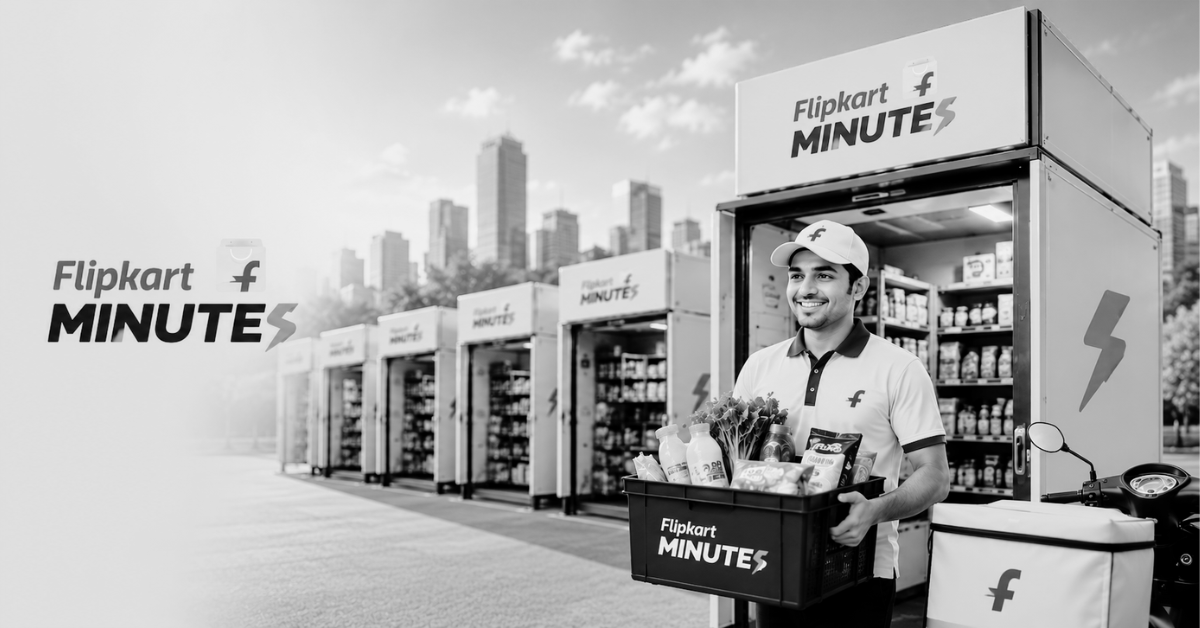
Flipkart Minutes, the quick commerce division of Walmart owned Flipkart, has crossed the milestone of 1,000 micro fulfilment centres across India, less than two years after its launch in August 2024. The company now operates across more than 130 cities and serves over 8,000 pincodes, highlighting the rapid expansion of its quick commerce network.
The milestone reflects Flipkart’s aggressive push into instant delivery as competition intensifies among major players in India’s fast-growing quick commerce market.
What Is Driving Flipkart Minutes’ Rapid Growth?
According to the company, order volumes on Flipkart Minutes have grown fivefold over the past year. A significant portion of this growth has come from Tier II and Tier III cities, where the platform recorded a remarkable 42X increase in scale compared to the previous year.
The company added more than 90 new cities during the period, allowing it to deepen its presence beyond major metropolitan markets and tap into rising demand from smaller towns and emerging urban centres.
This expansion strategy reflects a broader industry trend, with quick commerce players increasingly targeting underserved markets outside India’s largest cities.
Which Consumer Segments Are Fueling Demand?
Flipkart Minutes said Gen Z has emerged as its fastest growing customer segment and now accounts for more than 40% of its overall customer base.
Consumer buying patterns have also evolved significantly. While groceries remain a key category, customers are increasingly purchasing electronics, beauty products, wellness items, and lifestyle goods through the platform.
The shift indicates that quick commerce is gradually moving beyond daily essentials and becoming a preferred channel for a wider range of consumer purchases.
How Are Fresh Produce And Repeat Purchases Performing?
The platform reported strong growth across fresh produce categories. Average order values for fruits and vegetables increased by 30%, while repeat purchases grew by more than 20% over the past year.
These metrics suggest growing consumer trust in quick commerce platforms for recurring household purchases, an area that has traditionally been dominated by supermarkets and local retailers.
Flipkart Minutes also works with nearly 500 direct-to-consumer (D2C) brands and has connected more than 3,000 farmers through its Samarth Krishi initiative, strengthening its agricultural sourcing ecosystem.
What Sustainability Initiatives Has Flipkart Minutes Introduced?
As part of its sustainability efforts, Flipkart Minutes doubled its electric vehicle fleet over the past year. The company stated that electric vehicles now account for more than 10% of its deliveries.
The move aligns with broader industry efforts to reduce carbon emissions and improve the environmental sustainability of last-mile delivery operations.
How Does Flipkart Minutes Compare With Rivals?
The milestone comes amid intense competition among quick commerce players. According to company disclosures, Blinkit currently operates 2,243 dark stores, while Zepto and Swiggy Instamart operate 1,139 and 1,143 dark stores respectively.
Amazon has also accelerated its quick commerce ambitions through Amazon Now, recently announcing plans to expand to 100 cities using more than 1,000 micro fulfilment centres and over 100 Urban Fulfillment Centers.
Sources indicate that Flipkart Minutes is already on track to cross 1,500 micro fulfilment centres within the next few months, signaling that the company intends to remain aggressive in the ongoing race for quick commerce dominance.