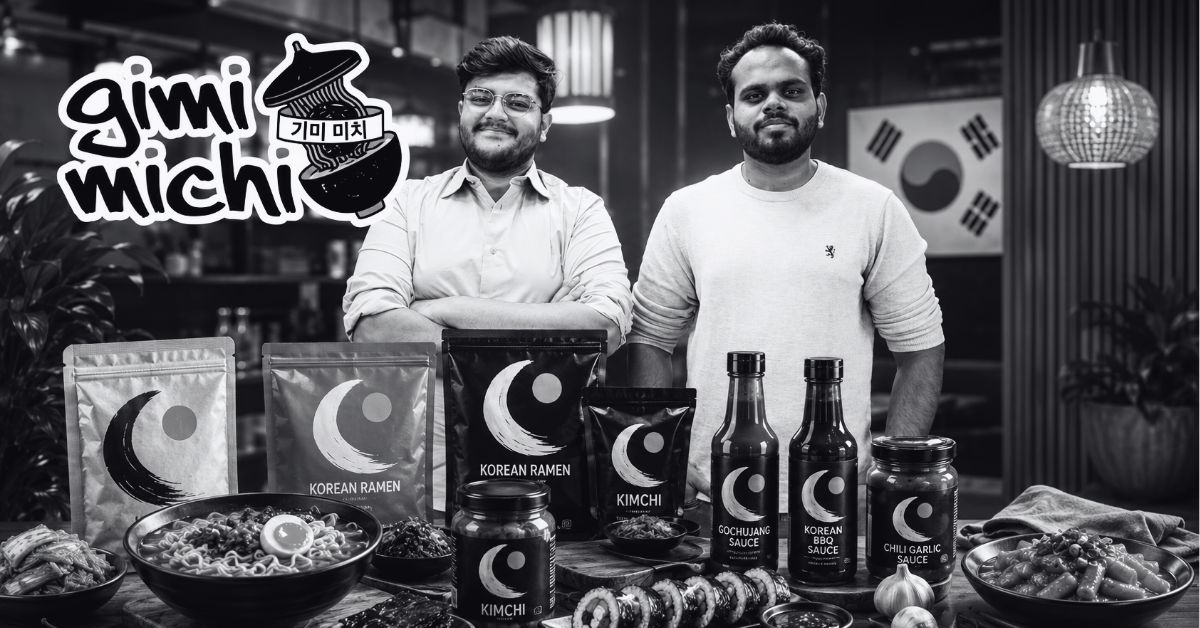
As K-Culture Sweeps India, Gimi Michi Bets Big On Korean Food
The Korean wave has already transformed India’s entertainment and beauty industries. Now, investors are betting that food could be the next major category to benefit.
Gurugram-based Korean FMCG startup Gimi Michi has raised $1 million in a seed funding round led by IndiaQuotient, with participation from DeVC, Titan Capital, and IIMA Ventures. The fresh capital will be used to accelerate product innovation, expand the team, strengthen distribution, and build a category defining Korean food brand for Indian consumers.
The funding comes at a time when Korean culture is rapidly influencing consumer preferences across India, driven by the explosive popularity of K-dramas, K-pop, social media content, and Korean lifestyle trends.
How Did Gimi Michi Spot A Massive Consumer Opportunity?
Founded by Nishank Goyal, Akhil Kumar, and Bodhi Rathor, Gimi Michi was launched just six months ago with a simple thesis: Korean food could follow the same adoption curve that Korean entertainment has witnessed in India.
The founding team combines experience from global organizations including BCG, Mondelez, and AB InBev, bringing expertise across consumer behavior, product development, and brand building.
According to founder Nishank Goyal, Indian consumers are no longer unfamiliar with Korean cuisine. Instead, the challenge lies in accessibility and affordability.
“We believed Korean food could see adoption similar to Korean entertainment because consumers already understand the culture and are actively looking for authentic products,” the founders have said.
Rather than positioning Korean food as a niche premium category, Gimi Michi is building products designed for mass-market consumption.
How Fast Is Gimi Michi Growing?
Despite being less than a year old, the startup has already demonstrated impressive traction.
Gimi Michi currently operates in the Korean ramen segment and claims to have become the best-selling noodles brand on Flipkart.
The company says it has crossed ₹1 crore in monthly net sales and is growing approximately 60% month-on-month with just a single product offering.
For investors, this level of growth is particularly significant because it suggests strong product-market fit before portfolio expansion.
The startup also reports repeat purchase rates substantially above category averages across both e-commerce and quick-commerce channels, indicating that customers are not merely experimenting with the product but actively returning for repeat purchases.
Why Are Tier-II And Tier-III Cities Driving Demand?
One of the most surprising aspects of Gimi Michi’s growth story is the geographic distribution of its customers.
According to the company, nearly half of all sales come from Tier-II and Tier-III cities.
This signals that Korean food adoption is not limited to affluent urban consumers in metros such as Delhi, Mumbai, or Bengaluru.
The spread of digital content through streaming platforms and social media has democratized cultural trends across India, creating nationwide demand for Korean products.
For consumer brands, this broad-based adoption significantly expands the addressable market.
Can Korean Cuisine Become The Next Mainstream Food Category?
The founders believe Korean cuisine is entering a phase similar to what Chinese and Italian food experienced in India decades ago.
Co-founder Akhil Kumar argues that Gen Alpha consumers are increasingly embracing global food experiences and could drive long-term adoption of Korean flavors.
As younger consumers influence household purchasing decisions, Korean food products may gradually transition from novelty purchases to everyday pantry staples.
Why Are Investors Excited About The Market?
The broader market opportunity is becoming difficult to ignore.
Industry estimates suggest India’s ramen market could exceed $1 billion over the next decade. Korean noodles already account for a substantial share of noodle sales across quick-commerce platforms, reflecting strong consumer demand.
The trend has also attracted major FMCG companies.
Industry giants such as Nestlé, ITC, and Hindustan Unilever have launched Korean-inspired product lines in recent months, validating the category’s growth potential.
However, unlike diversified FMCG companies, Gimi Michi is positioning itself as a dedicated Korean food brand with a singular focus on authenticity and category leadership.
What Comes Next For Gimi Michi?
While ramen remains its flagship offering, the company has significantly larger ambitions.
The startup plans to expand into Korean sauces, snacks, ready-to-eat meals, and other adjacent categories as it builds a full-stack Korean food ecosystem.
The newly raised funding is expected to accelerate this product expansion while strengthening its presence across quick-commerce platforms, modern retail outlets, and digital channels.
As Korean culture continues reshaping consumer preferences across India, Gimi Michi is aiming to become the country’s first scaled Korean FMCG brand.
If current growth momentum continues, the startup could emerge as one of the biggest beneficiaries of India’s next major food consumption trend.