Meta CEO Says Company Will Avoid Further Layoffs While Expanding AI Investments
Meta CEO Mark Zuckerberg has acknowledged that the company made mistakes during its ongoing artificial intelligence-driven workforce transformation, as the social media giant continues to restructure its operations around AI.
In an internal memo seen by Reuters, Zuckerberg told employees that the scale and speed of changes underway have created challenges and that mistakes were inevitable as Meta adapts to the rapidly evolving AI landscape.
“Given the complexity of these changes, we’ve made mistakes and will almost certainly make more,” Zuckerberg wrote, while emphasizing that the company remains focused on providing as much organizational stability as possible.
The comments come as Meta ramps up investments in artificial intelligence, positioning itself as one of the biggest spenders in the global AI race.
AI Transformation Reshapes Meta’s Workforce
Meta has been aggressively reorganizing its workforce to align with its AI ambitions.
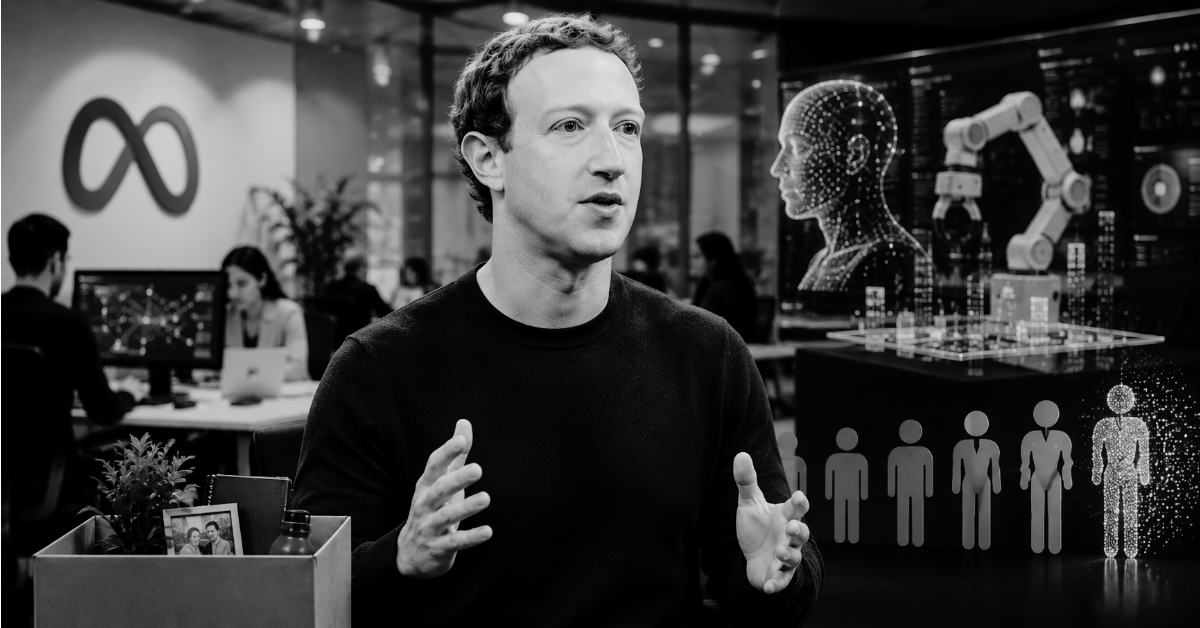
In May, the company laid off approximately 10% of its global workforce while simultaneously reassigning around 7,000 employees to new AI-related initiatives and workflows.
The restructuring reflects a broader trend across the technology sector, where companies are increasingly redesigning teams and business processes around artificial intelligence.
Despite the major workforce changes, Zuckerberg reassured employees that Meta does not currently expect additional company wide layoffs this year.
“I don’t want to overpromise because the world is changing in ways that are out of our control,” he said in the memo.
Employees May Be Reassigned To New Roles
Zuckerberg indicated that Meta is attempting to create flexibility within its workforce rather than relying solely on layoffs.
According to the memo, employees who have been reassigned to train AI models or work on AI-related projects could potentially move into other roles if the company determines that staffing decisions need adjustment.
“By creating important new roles for people, this also allowed us to shrink the size of teams knowing that if we make mistakes in some places, then we could transfer some people back,” Zuckerberg explained.
The approach highlights Meta’s effort to balance cost reductions with retaining talent as AI becomes increasingly central to its business strategy.
Meta Plans Bigger Investments In Team Building
Alongside organizational changes, Zuckerberg said Meta intends to increase spending on employee engagement and collaboration initiatives.
The company plans to allocate larger budgets for offsite events, internal gatherings, and team-building activities.
Meta is also organizing a large-scale hackathon in July aimed at encouraging collaboration across departments and accelerating development of the company’s latest AI models and products.
The initiative reflects Zuckerberg’s belief that innovation in AI requires stronger coordination between teams working across different parts of the business.
Management Structure Under Review
The memo also addressed employee concerns about management structures introduced during the AI transition.
Reports suggest Meta’s Applied AI Engineering unit adopted an unusually flat hierarchy, with manager-to-employee ratios reaching as high as 1:50.
While such structures can improve efficiency and reduce bureaucracy, employees reportedly raised concerns about managerial oversight and support.
Zuckerberg acknowledged those concerns and said Meta plans to scale back the practice, suggesting that the company may move toward more balanced management structures in the future.
Meta’s Massive AI Spending Continues
The workforce overhaul comes alongside unprecedented investment in artificial intelligence infrastructure.
In April, Meta raised its annual capital expenditure forecast to between $125 billion and $145 billion, one of the largest AI investment commitments made by any technology company.
The spending will support data centers, AI chips, research initiatives, talent acquisition, and the development of next-generation AI products.
As competition intensifies between Meta, OpenAI, Google, Anthropic, Microsoft, and Amazon, Zuckerberg is betting that AI will become the company’s most important growth driver over the coming decade.
While acknowledging that mistakes are inevitable during such a transformation, Zuckerberg’s message signals that Meta remains fully committed to its AI-first strategy, even as it navigates the challenges of reshaping one of the world’s largest technology workforces.