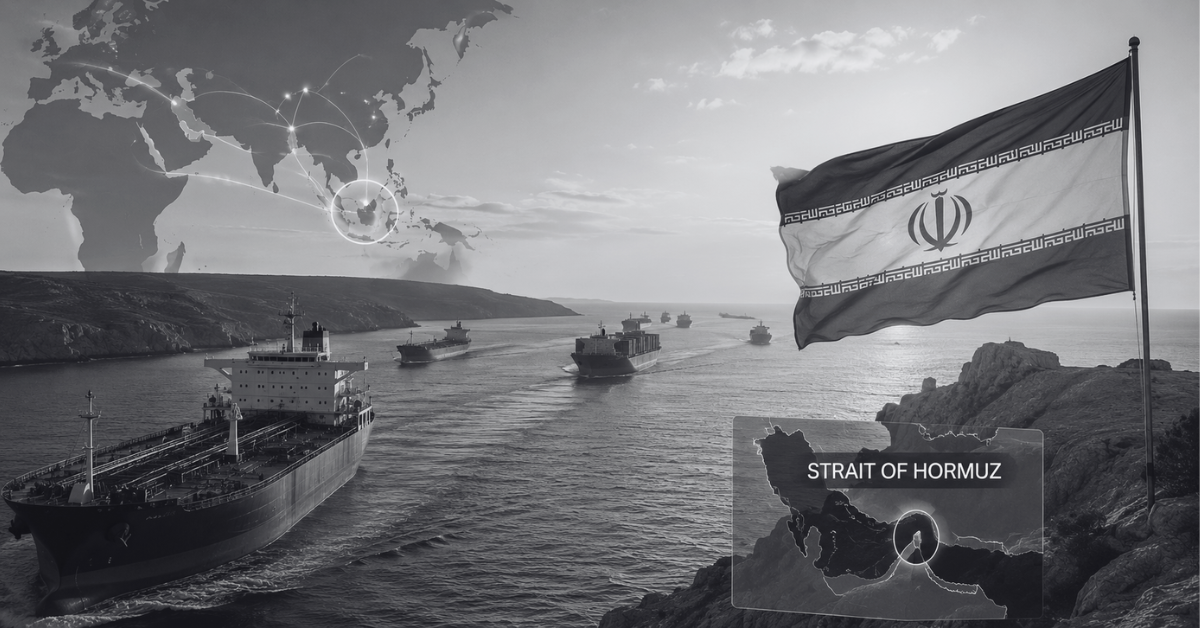
Why Has the Strait of Hormuz Reopened but Tensions Still Persist?
The Strait of Hormuz, one of the world’s most strategically important maritime chokepoints, has reopened for commercial shipping following a Memorandum of Understanding (MoU) between the United States and Iran aimed at easing regional tensions. While vessels have resumed transit through the waterway, the broader geopolitical crisis remains unresolved. Iran has made it clear that reopening the strait does not mean unrestricted navigation, insisting that all commercial traffic must comply with routes approved by Tehran and the Islamic Revolutionary Guard Corps (IRGC). The development has reignited concerns over global trade, energy security, and the future governance of one of the busiest shipping lanes in the world.
What Triggered Iran’s Objection to the Proposed Shipping Corridors?
To facilitate the safe evacuation of stranded commercial vessels and thousands of seafarers, the International Maritime Organization (IMO), with support from Oman, proposed temporary maritime corridors through the Gulf. One suggested route would pass through Iranian waters, while another would remain closer to Omani waters.
Iran rejected these arrangements, arguing that the corridors had been designed without its consultation or approval. According to Tehran, allowing vessels to use routes outside its supervision undermines its authority over waters it considers vital to its national security. The IRGC subsequently warned that ships using unauthorised routes should not expect Iranian protection during transit, making coordination with Iranian authorities a prerequisite for safe passage.
Why Is Iran Determined to Control Shipping Through the Strait of Hormuz?
From Iran’s perspective, the Strait of Hormuz is far more than a commercial waterway it is a critical element of its national security and regional influence. By insisting that commercial vessels follow routes authorised by Iranian authorities, Tehran seeks to reinforce its strategic position in the Gulf while maintaining oversight of maritime traffic.
The IRGC has also asserted that it must play a central role in monitoring and authorising vessel movement through the strait. Iranian authorities have warned that any consequences arising from the use of unauthorised routes would be the responsibility of shipowners, operators, and vessel commanders. This position highlights Tehran’s intention to shape future maritime operations even after military tensions have eased.
How Are Shipping Companies and Global Trade Responding?
Despite the reopening of the Strait of Hormuz, commercial shipping companies remain cautious. Confidence in the route suffered another setback after a Singapore-flagged cargo vessel was reportedly struck near the Gulf of Oman, prompting the IMO to temporarily suspend evacuation operations.
The incident underscored that the current ceasefire framework has not yet translated into predictable and secure navigation. As a result, shipping firms, insurers, and maritime agencies continue to assess risks carefully before resuming normal operations. Higher insurance premiums, possible route adjustments, and operational delays remain concerns for companies dependent on Gulf trade.
Why Does the Strait of Hormuz Matter to the Global Economy?
The Strait of Hormuz serves as one of the world’s most critical energy corridors, connecting the Persian Gulf to international markets. A significant share of global crude oil, liquefied natural gas (LNG), and petroleum products passes through this narrow waterway every day.
Any disruption in maritime traffic can immediately affect global energy prices, freight costs, supply chains, and inflation across multiple economies. Even though commercial shipping has resumed, uncertainty over routing rules continues to influence global shipping strategies and energy markets.
What Is the Current Status of the US-Iran Peace Understanding?
The existing understanding between the United States and Iran is widely viewed as a temporary arrangement rather than a comprehensive peace agreement. Its immediate objective was to halt hostilities and restore commercial movement through the Strait of Hormuz. However, several critical issues remain unresolved, including Iran’s nuclear programme, US sanctions, military deployments in the Gulf, commercial shipping regulations, and the future role of the IRGC in maritime security.
The disagreement over shipping corridors demonstrates that while armed conflict has subsided, the strategic contest for influence over the Strait of Hormuz continues. The waterway remained significantly disrupted for more than 110 days before the June ceasefire framework enabled commercial traffic to gradually return. Future negotiations will likely determine whether the current reopening evolves into long-term maritime stability or remains vulnerable to renewed geopolitical tensions.