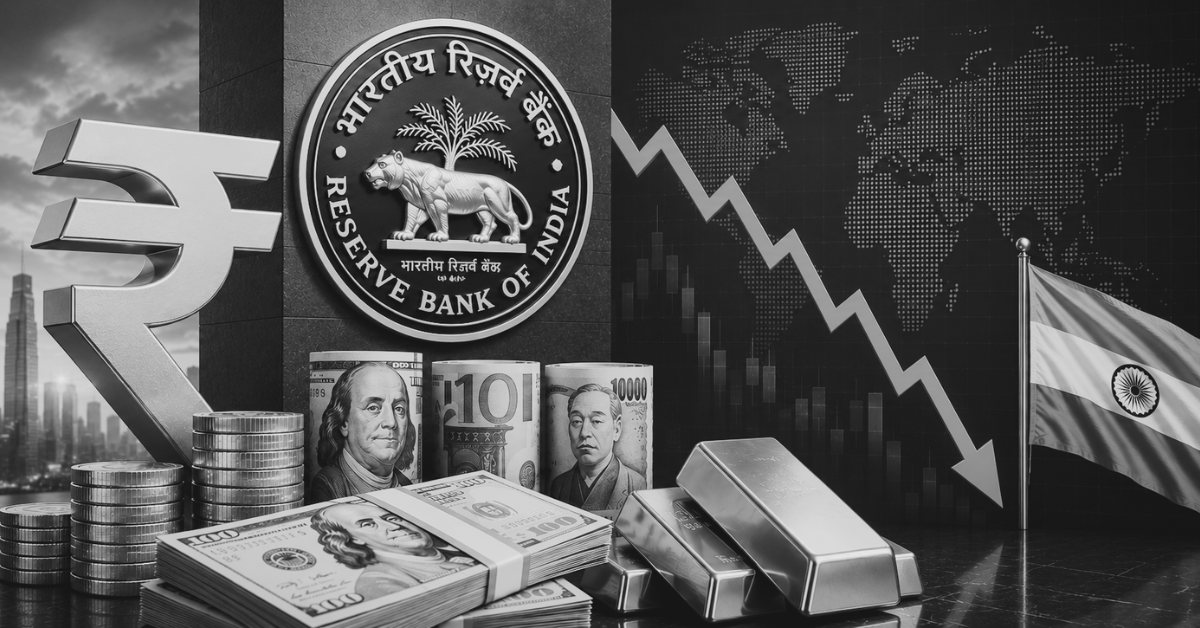
Gold Holdings See Sharp Decline as Foreign Exchange Reserves Retreat from Recent Highs
India’s foreign exchange (forex) reserves declined by $5.654 billion to $666.933 billion during the week ended June 26, according to the latest data released by the Reserve Bank of India (RBI). The decline comes after the country’s reserves had risen by $963 million in the previous reporting week, highlighting continued volatility in India’s external asset position amid changing global market conditions.
The fall was largely driven by a sharp decline in the value of gold reserves, while foreign currency assets, special drawing rights (SDRs), and India’s reserve position with the International Monetary Fund (IMF) also recorded modest declines.
Despite the weekly drop, India’s forex reserves remain among the highest globally, providing a strong buffer against external economic shocks and currency market volatility.
Forex Reserves Decline After Previous Week’s Gain
According to RBI data, India’s total forex reserves stood at $666.933 billion as of the week ended June 26, down from $672.587 billion reported a week earlier.
The decline follows a brief recovery after several weeks of fluctuations caused by geopolitical tensions and currency market interventions.
Earlier this year, India’s forex reserves had climbed to a record high of $728.494 billion during the week ended February 27.
However, the onset of geopolitical tensions in West Asia triggered pressure on the Indian rupee, prompting the RBI to intervene in the foreign exchange market through dollar sales, which contributed to the subsequent decline in reserves.
Foreign Currency Assets Dip Marginally
Foreign Currency Assets (FCAs), the largest component of India’s forex reserves, also witnessed a slight decline during the reporting week.
According to the RBI, FCAs fell by $150 million to $541.067 billion.
Foreign currency assets include investments held in major global currencies such as the US dollar, euro, British pound, and Japanese yen.
The RBI noted that movements in FCAs also reflect fluctuations arising from the appreciation or depreciation of non-US currencies against the dollar, in addition to changes resulting from active reserve management.
Gold Reserves Record Sharpest Decline
The biggest contributor to the overall fall in reserves was the decline in the value of India’s gold holdings.
According to RBI data, the country’s gold reserves fell by $5.394 billion during the reporting week to $102.536 billion.
Changes in global gold prices and valuation adjustments often influence the value of gold reserves held by central banks.
India has steadily increased its gold holdings in recent years as part of efforts to diversify its reserve assets beyond foreign currencies.
Despite the weekly correction, gold continues to remain an important component of the country’s foreign exchange reserves.
SDRs and IMF Reserve Position Also Decline
Other reserve components also recorded marginal declines.
India’s Special Drawing Rights (SDRs) with the International Monetary Fund decreased by $89 million to $18.558 billion.
Meanwhile, the country’s reserve position with the IMF declined by $21 million, standing at $4.772 billion at the end of the reporting week.
Although relatively smaller compared to foreign currency assets and gold reserves, these components contribute to the overall strength of India’s external financial position.
Why Are Forex Reserves Important?
Foreign exchange reserves play a critical role in maintaining currency stability, financing imports, meeting external debt obligations, and protecting the economy during periods of global financial uncertainty.
A strong reserve position enables the RBI to intervene in currency markets whenever necessary to reduce excessive volatility in the rupee.
India’s reserves also strengthen investor confidence by demonstrating the country’s ability to withstand external economic shocks and manage balance-of-payments risks.
The recent fluctuations largely reflect changing global market conditions rather than any structural weakness in the Indian economy.
Outlook Remains Stable
Although reserves declined during the latest reporting week, India’s overall external position continues to remain robust.
The country’s forex reserves remain significantly above historical levels and provide ample import cover along with financial stability.
Market participants will continue monitoring crude oil prices, capital flows, geopolitical developments, exchange rate movements, and RBI interventions for their impact on future reserve levels.
As global financial markets remain sensitive to geopolitical events and currency fluctuations, weekly changes in forex reserves are expected to continue.
Nevertheless, with reserves still comfortably above $660 billion, India retains one of the strongest external buffers among emerging economies, supporting macroeconomic stability and providing confidence to investors amid an uncertain global environment.